
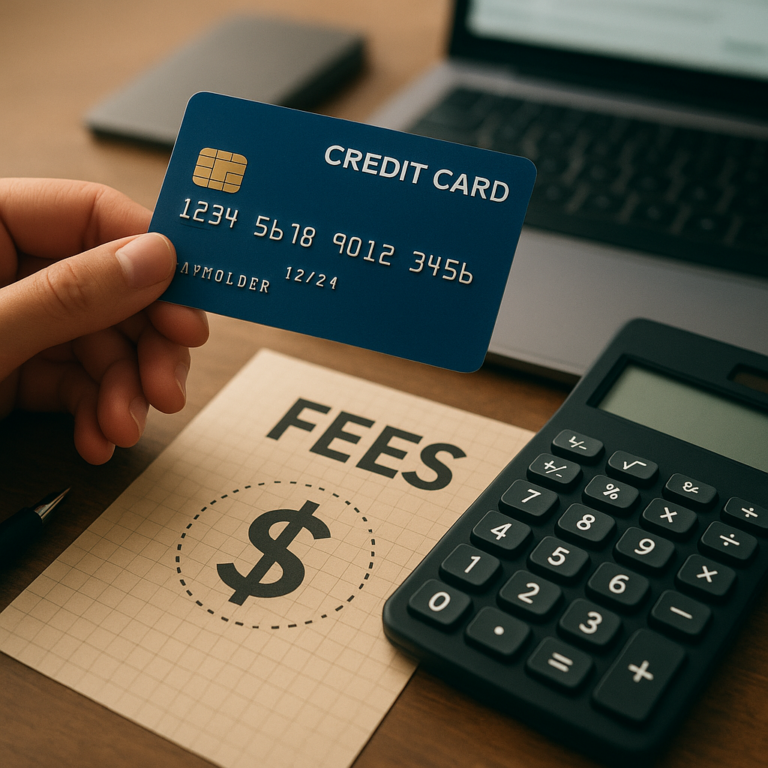
Credit card offers can look simple at first glance, yet the real cost often appears only after you compare the fine print. A card with a generous rewards rate may still charge enough in fees to outweigh the benefits, especially if you carry a balance or travel abroad. Before you
apply, it helps to look past promotions and focus on the charges that can reshape your budget in the first month, the first year, and beyond. That extra attention matters because fee structures are not always obvious on a marketing page. Some costs show up as a flat yearly charge,
Common fees found on U.S. credit cards
while others depend on how you use the account, when you pay, or where you make purchases. If you learn the common fee patterns ahead of time, you can choose a card that fits your habits instead of one that only looks attractive from a distance. Most card issuers list several possible charges in the account
agreement, but the most important ones tend to be easy to overlook during a quick application review. Annual fees, interest charges, late-payment penalties, cash advance costs, and foreign transaction fees can each affect your total cost in different ways. Some cards also include balance transfer fees, returned payment charges, or higher penalty rates after a
missed due date. Reading the fee table before applying gives you a clearer view of how the card behaves in ordinary life. It also helps to separate one-time fees from recurring fees. A card with a modest upfront charge may be fine if you will use valuable perks throughout the year, but repeated costs
can become expensive fast if your spending is irregular. The best approach is to match the fee type to your likely behavior, then ask whether the card still makes sense after a realistic month of use. That habit is especially useful when comparing cards across the same issuer or between rewards and low-cost options.
How annual fees are justified
Annual fees are easiest to understand when you treat them as a membership cost for the card’s features. Premium travel cards, cash back products with strong bonus categories, and cards with statement credits may charge yearly fees because they promise value in return. The
key question is whether you will actually use enough benefits to offset that charge. If the annual cost is higher than the value you expect to capture, the card may not be a good fit, even if the rewards sound impressive. Some issuers waive
the annual fee for the first year, which can make the offer seem more appealing than it really is. That introductory break should not distract you from the long-term cost after renewal, because the second-year fee is often the one that matters
most. Before applying, estimate how much value you can reasonably earn from rewards, travel credits, or insurance protections, then compare that total with the fee itself. A card that looks expensive can still be worthwhile, but only if the benefits are easy to use.
Interest charges and APR basics
APR is the rate that determines how much interest you pay when you do not pay your statement balance in full. Many applicants focus on rewards and ignore APR, but that number can quickly dominate the cost of the card if you carry debt. Some
products advertise a low promotional rate for purchases or balance transfers, then switch to a much higher ongoing rate later. The difference between a card with a low fee and a card with a lower APR can be more important than the rewards rate, especially
for anyone who expects to revolve a balance. To compare cards honestly, look at the purchase APR, any introductory APR, and whether the issuer uses a variable rate tied to market conditions. A variable APR can change over time, which means a card that feels
affordable today may become pricier later. If you already know you will pay in full every month, APR may matter less than fees and perks. If not, use APR as a core part of the decision, because interest can exceed every other cost combined.
Penalty fees that can raise costs quickly
Penalty fees are the charges most likely to surprise people because they often appear after a mistake rather than as part of routine use. Late fees are the best known example, and they can be followed by a penalty APR if the account remains past
due. Returned payment fees can add another layer of cost if a bank transfer fails or a check bounces. These charges may seem small compared with a credit line, but they can create a costly cycle if you miss payments more than once. The safest
way to avoid penalty pricing is to build a simple payment routine before the first bill arrives. Set reminders, use autopay for at least the minimum amount, and keep enough cash in your account to cover scheduled withdrawals. Also check whether the issuer reports
due dates at the same time each month, because even a slight shift in timing can lead to confusion. The best card is not only the one with strong rewards; it is also the one that is easiest to manage without triggering extra charges.
Late fees and grace periods
A grace period gives you time to pay your balance before interest starts on new purchases, but that protection can disappear after a missed payment. Once you lose the grace period, even normal spending becomes more expensive. Late fees may also stack with interest and other penalties, making a single
Foreign transaction and cash advance costs
slip more costly than many cardholders expect. For that reason, grace periods are worth checking before approval, not after the first billing cycle. Travelers should pay close attention to foreign transaction fees, which are added when purchases are processed outside the United States or through certain international networks. A fee of a few percentage
points can add up quickly on hotels, meals, and airfare. Cash advances are even more expensive, since they often trigger fees immediately and may begin accruing interest right away. Unless you truly need emergency cash access, this feature usually costs far more than ordinary purchases and should be treated as a last resort.
A checklist for comparing cards honestly
Start by listing every fee that could affect your real use, then decide which ones you can avoid and which ones are unavoidable. Compare annual fees against the value of rewards and benefits, review APR if you may carry a balance, and check for late-payment, returned-payment, and
cash advance charges. If you travel, include foreign transaction costs in the calculation. This simple checklist helps you compare cards on equal terms instead of relying on a headline offer that may not match your actual spending pattern. Next, estimate your first year with the card using your own
habits rather than the issuer’s best-case example. Think about how often you travel, whether you pay in full, whether you might need a balance transfer, and how likely you are to miss a due date. The more honestly you model your behavior, the easier it becomes to
choose a card with fees you can manage. A clear comparison now can prevent frustration, expensive surprises, and regret after approval. Finally, remember that a low-fee card is not automatically the best card, and a premium card is not automatically a mistake. The real answer depends on whether
the fee structure fits your life. If you understand what each charge means, you can pick a card that rewards your habits instead of punishing them. That is the simplest way to avoid paying for features you will never use while still getting the value you actually want.
